The ideal amount of sleep varies from person to person. Most adults perform best with 7 to 9 hours, but a small percentage need a little less or a little more. Forcing 8 hours when your body only needs 7 can be counterproductive, and the reverse is just as true.
Sleep needs are a personal matter
Your needs depend on your age, genetics, activity level and health. A good rule of thumb: if you wake up feeling rested without an alarm for several days in a row, you've found your sweet spot. Daytime drowsiness, irritability and cravings are signs of sleep debt.
Quality or quantity?
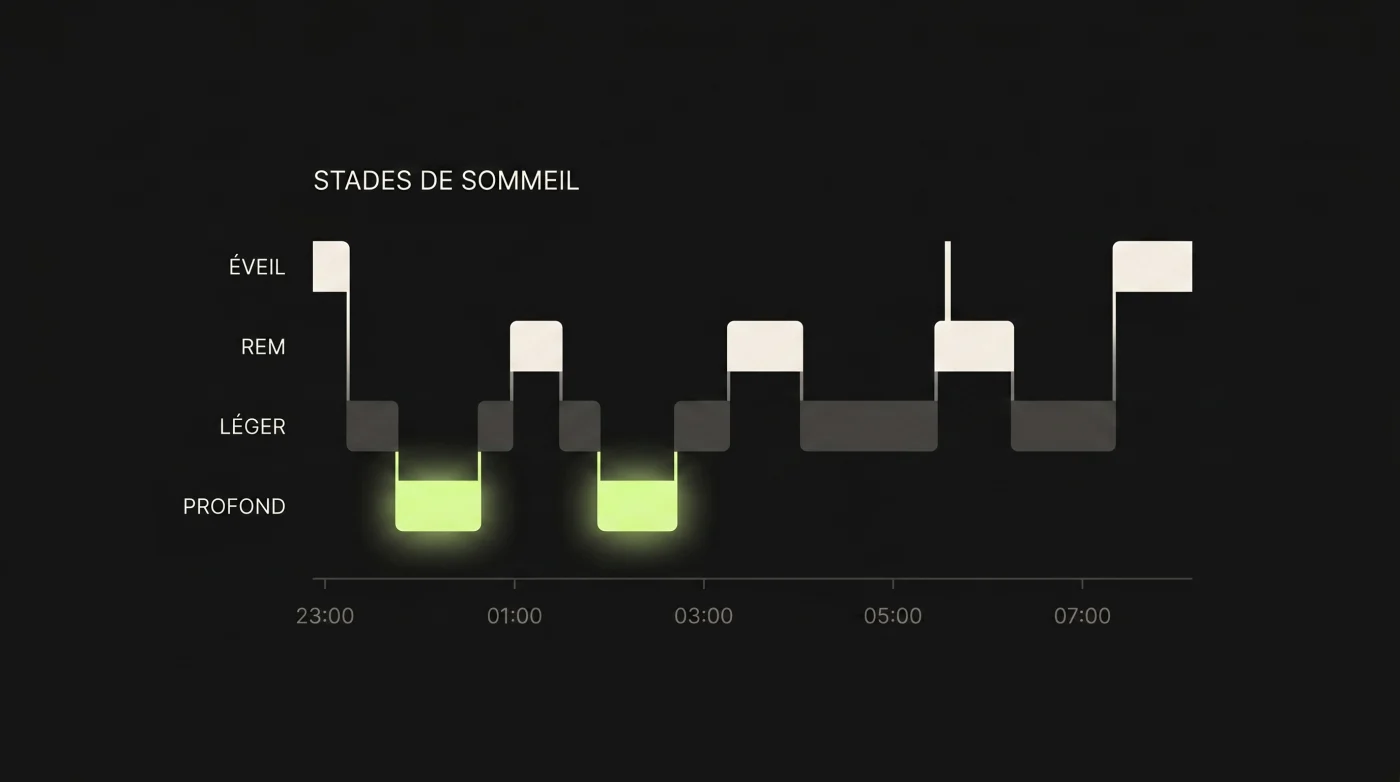
Seven hours of well-structured sleep beats nine broken ones. What matters is sleep efficiency (time actually asleep vs. time in bed) and the share of deep sleep and REM sleep. To go further, read our guide on improve your deep sleep.
Sleep debt can be paid back
One short night can be made up, but debt that builds over the week drags down your mood, focus and metabolism. A consistent daily routine beats a big weekend catch-up, which throws off your internal clock.
Measure to find your ideal duration
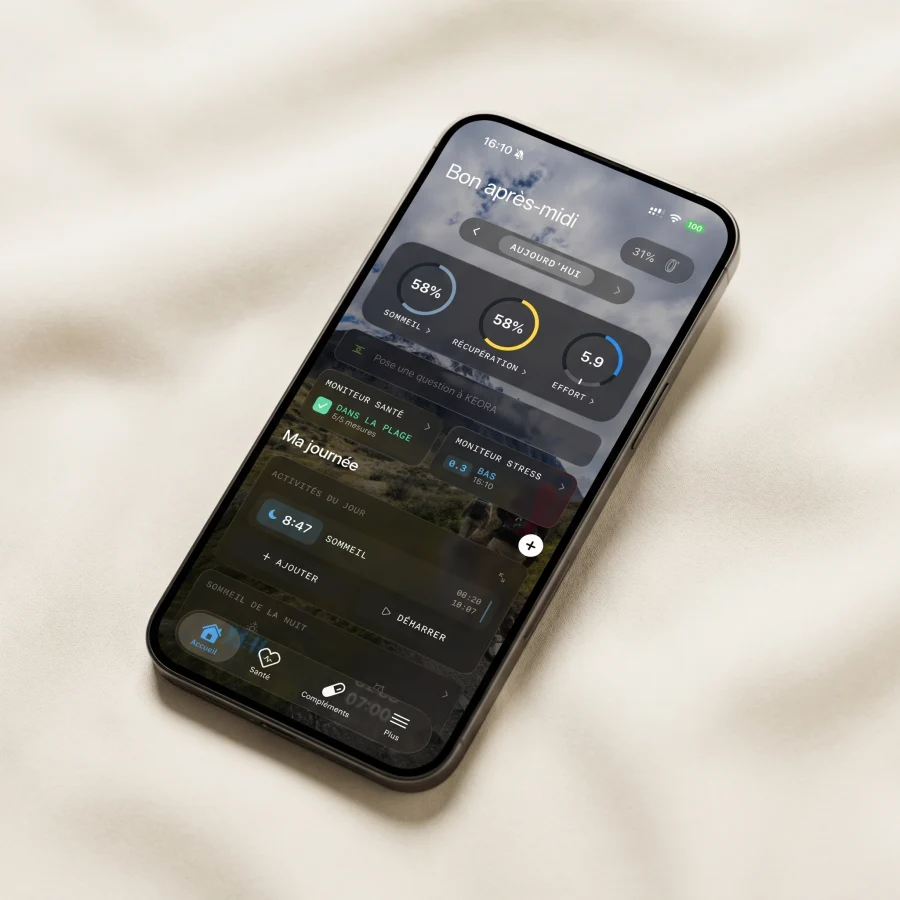
The KEORA Ring tracks your actual sleep time, efficiency and stages, night after night. Within a few weeks you can see your ideal duration emerge, the one where your recovery score is at its highest.
Your body knows what it needs. You just have to listen to it — and measure it.