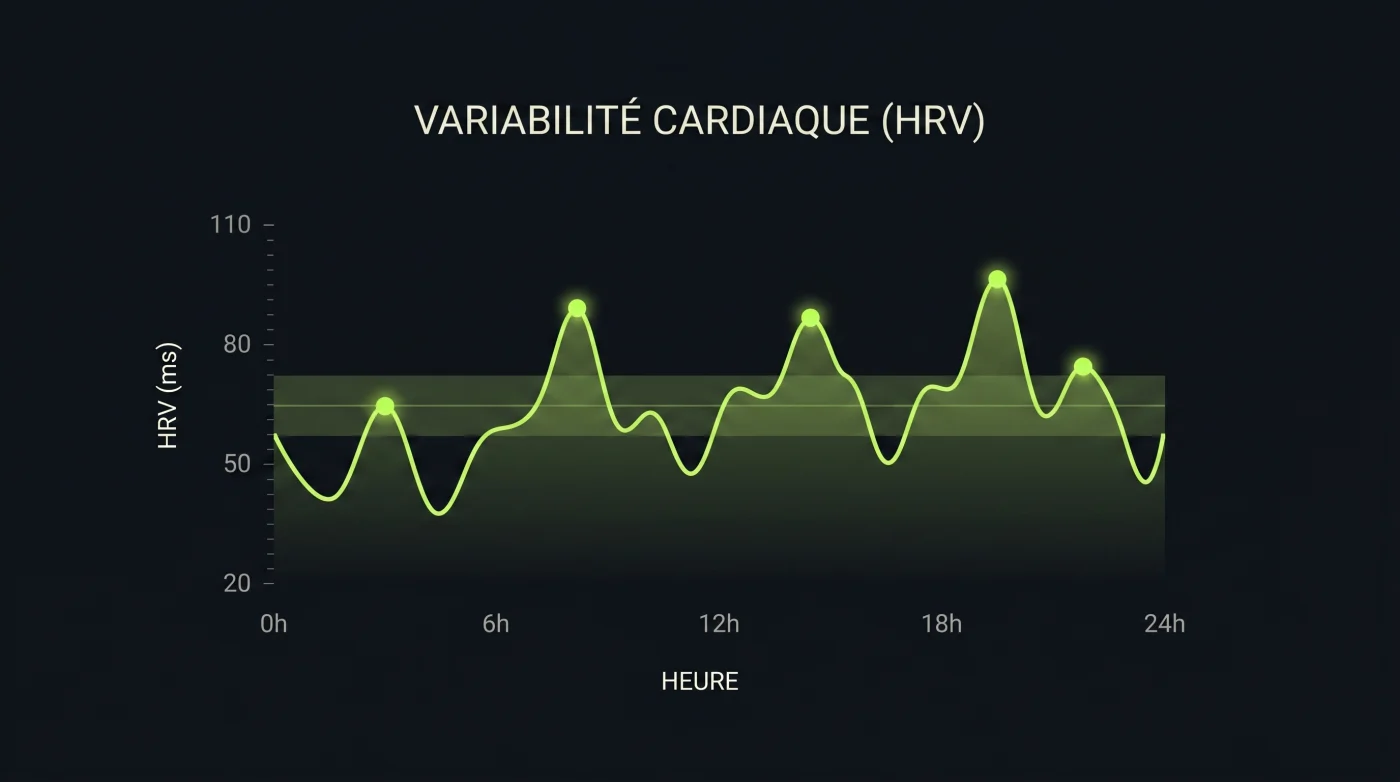
Resting heart rate is the number of beats per minute when you're completely at rest, ideally measured during sleep. In adults, it typically falls between 50 and 70 beats per minute, and lower in trained athletes.
Why lower is often better
An efficient heart pumps more blood with each beat, so it beats less often at rest. A low, steady heart rate is generally a good cardiovascular sign. On the other hand, a rate that rises for no reason can signal fatigue, dehydration, too much alcohol, or the onset of illness.
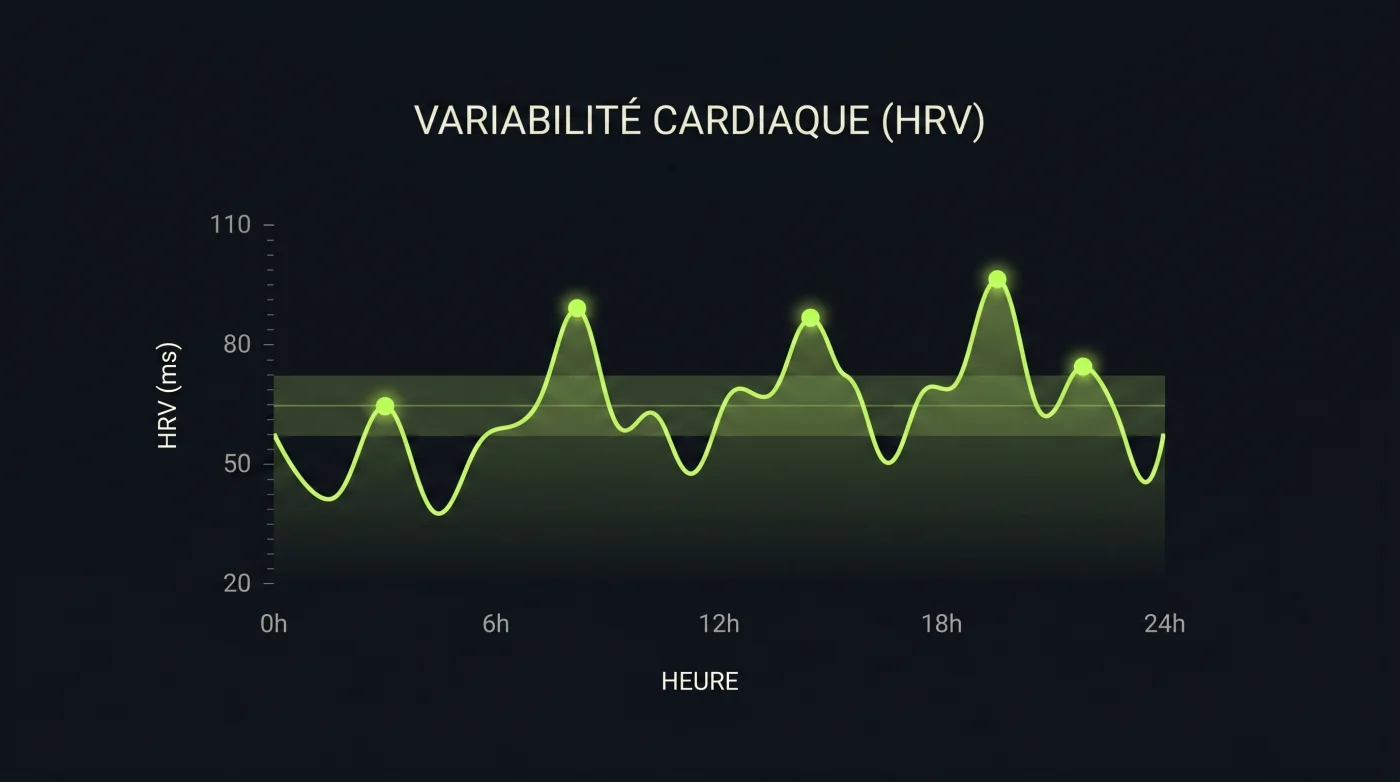
Track the trend, not the isolated number
Just like the heart rate variability, it's your personal trend that matters. A rise of 5 to 10 beats above your normal waking rate is a clear signal: your body needs to recover.
How to improve it
Regular endurance training, quality sleep, good hydration and stress management all lower your resting heart rate over time. The KEORA Ring measures it at night, at the most reliable moment, and alerts you when it strays from your baseline.
Your resting heart rate is a barometer. Learn to read its variations.