Intermittent fasting means concentrating your meals within a set time window (for example 8 hours) and fasting for the rest of the time. The most common approach is the 16/8 method.
What we expect from it
By narrowing the eating window, many people naturally eat less, which can help with weight management. Some studies also point to benefits for insulin sensitivity. The effect often comes as much from consistency as from the fast itself.
Its limits
Fasting is no magic trick: the quality of what you eat still matters most. Skipping breakfast only to reach for ultra-processed food gets you nowhere. And it simply doesn't work for everyone.
Who it's not recommended for
Intermittent fasting is not recommended during pregnancy, if you have a history of eating disorders, treated diabetes, or if you are a teenager, without medical advice. If in doubt, check with a healthcare professional.
Measuring the response
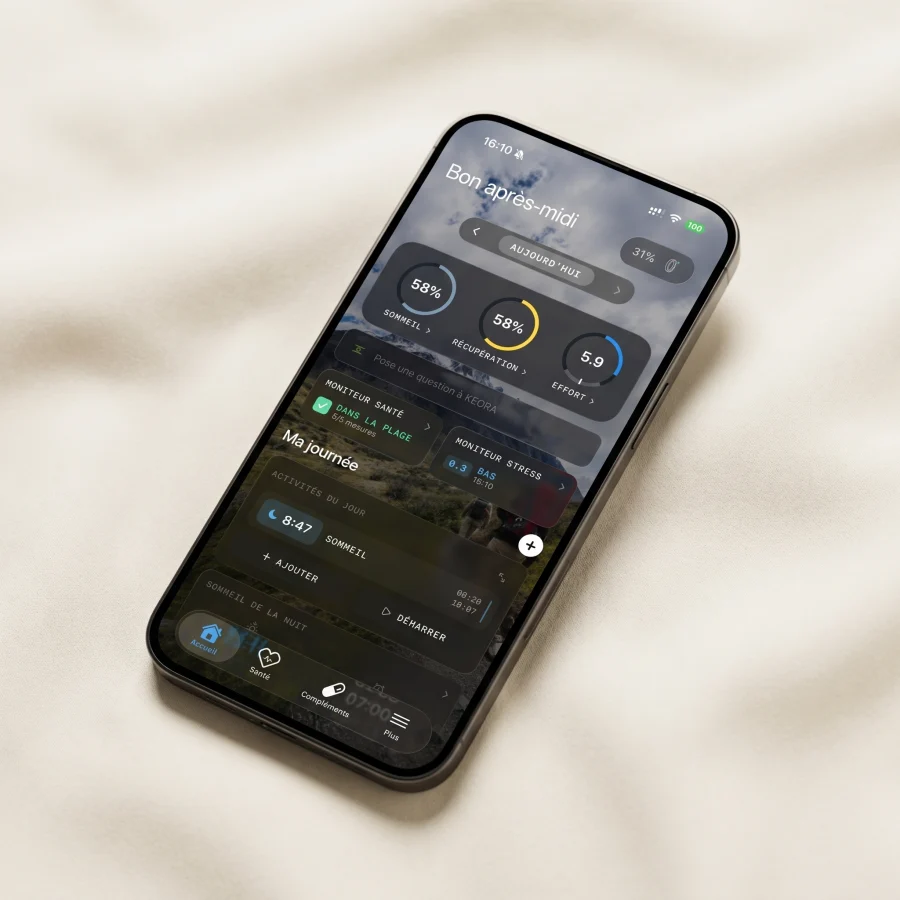
Fasting, especially in the evening, can influence your sleep. The KEORA Ring shows you how your body responds, so you can adjust rather than blindly follow a trend.
The right eating rhythm isn't a trend, it's the one that works for you, proven by your body.