Light, especially its blue component, is the main signal that sets your internal clock. In the morning, it wakes you up. In the evening, too much of it tells your brain it's still daytime and delays melatonin.
Screens: light, but not only that
Screens delay sleep through their light, but also through what you do on them: notifications, stimulating content, endless scrolling that pushes bedtime later. A blue-light filter doesn't fix that second problem.
What actually works
- Dim the lights an hour before bed
- Keep your phone away from the bed
- Favour calm activities in the evening
- Get morning daylight exposure to set your internal clock
Key takeaway: evening light delays sleep, but how you use screens matters as much as the light they emit. Dim the lights, put your phone away, and wind down your evening.
Measure the effect
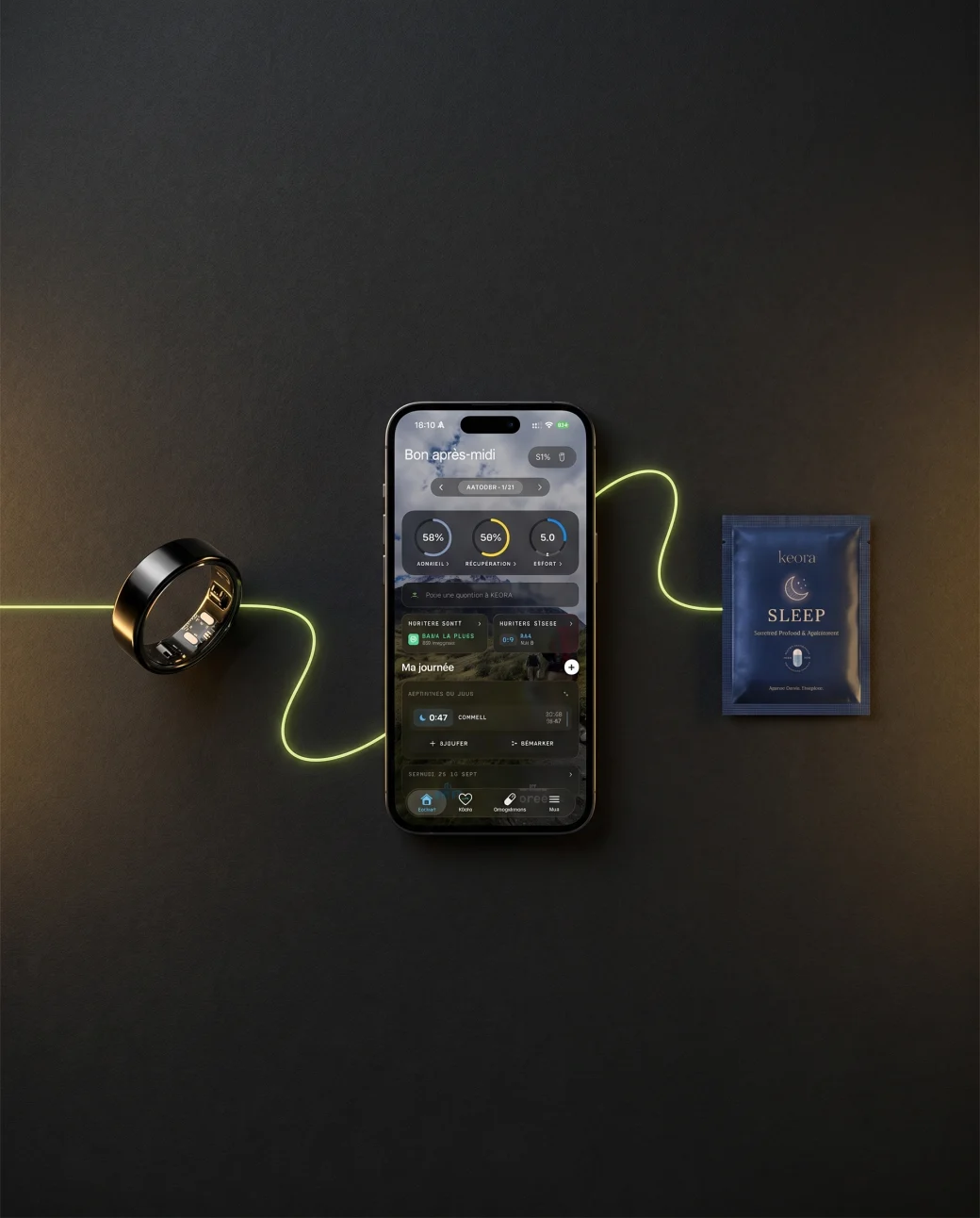
The KEORA Ring shows you whether your screen-free evenings really improve your sleep onset and your deep sleep. You stop guessing and start seeing what actually works for you.
Your internal clock follows the light. In the evening, give it a little darkness.