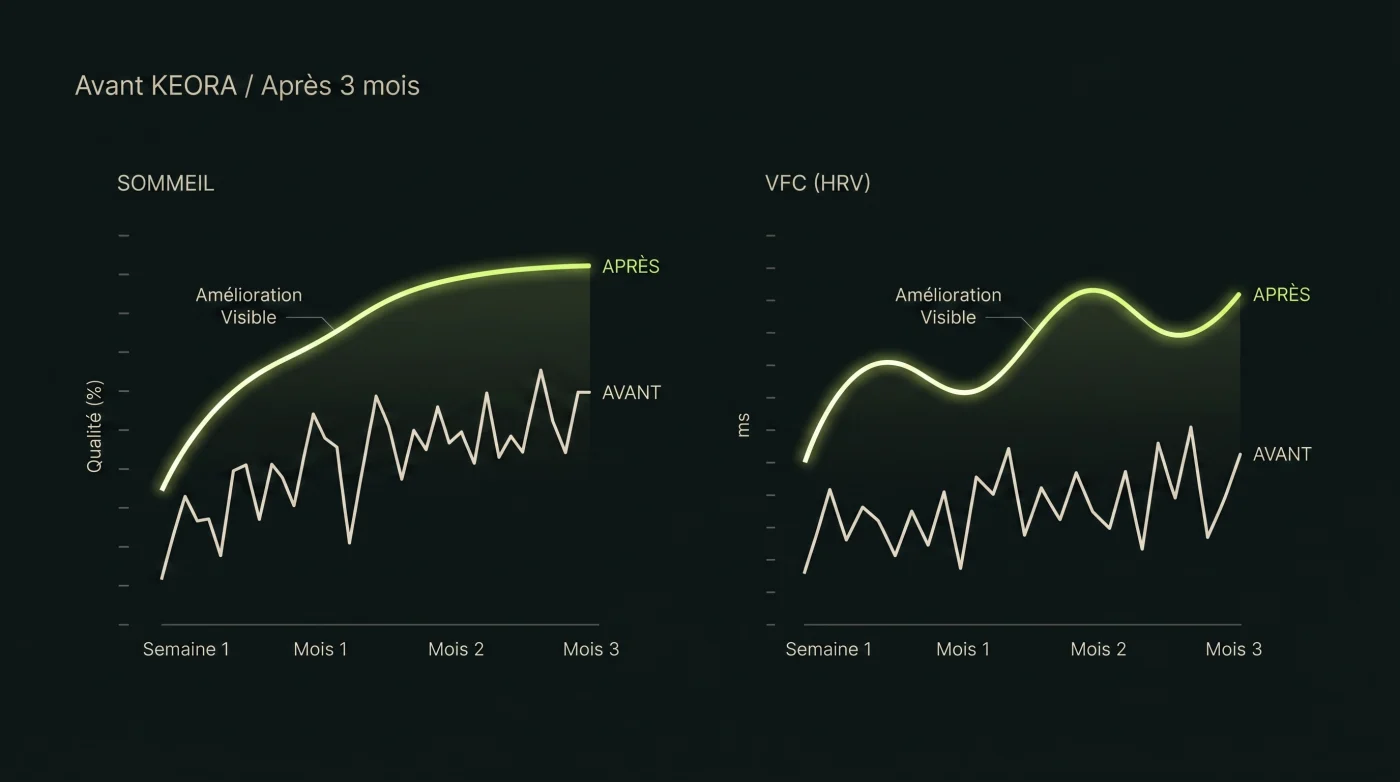
Overtraining happens when your training load consistently exceeds your ability to recover. The result is paradoxical: you train more, but you progress less — or even go backwards.
The warning signs
- Performance drop despite the effort
- Resting heart rate on the rise
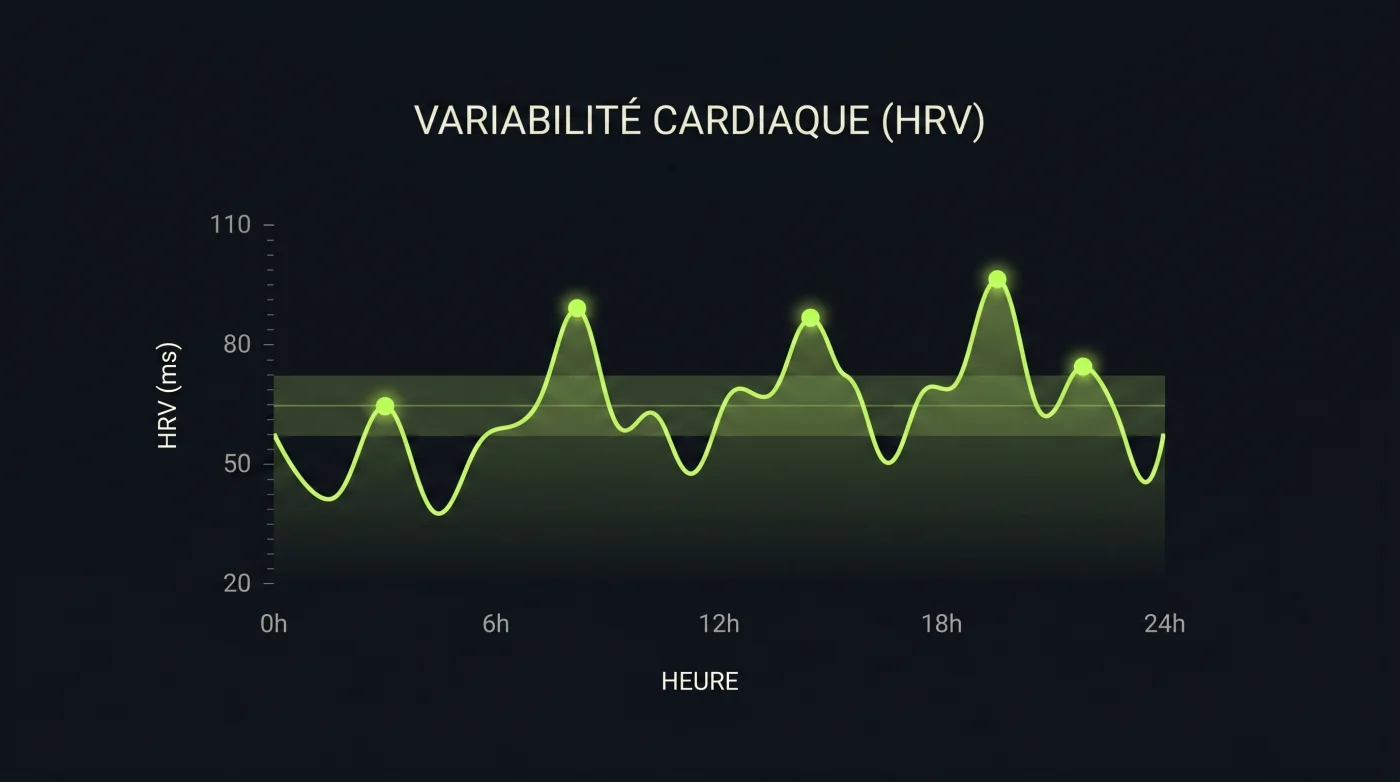
- Heart rate variability that keeps dropping
- Disrupted sleep and persistent fatigue
- Irritability, lack of motivation, recurring infections
The key role of recovery
Progress is built during rest, not during effort. Alternating intense and easy days, getting enough sleep, and listening to your body's signals keeps you out of the overtraining spiral. See also how to recover well after exercise.
Key takeaway: more isn't always better. If your resting heart rate rises and your HRV drops for several days in a row, ease off before something breaks.
Calibrating effort with data
The KEORA Ring calculates a recovery score every morning based on your sleep, heart rate and HRV. So you know when to push and when to rest, instead of just guessing.
Champions aren't the ones who train the most, they're the ones who recover the best.