
A good night's sleep isn't just about hours. What matters is the balance between light sleep, REM sleep and deep sleep. Deep sleep is when your body releases growth hormone, clears your brain and locks in everything you learned during the day. Yet it's often the first phase we sacrifice without even noticing.
Deep sleep: what exactly is it
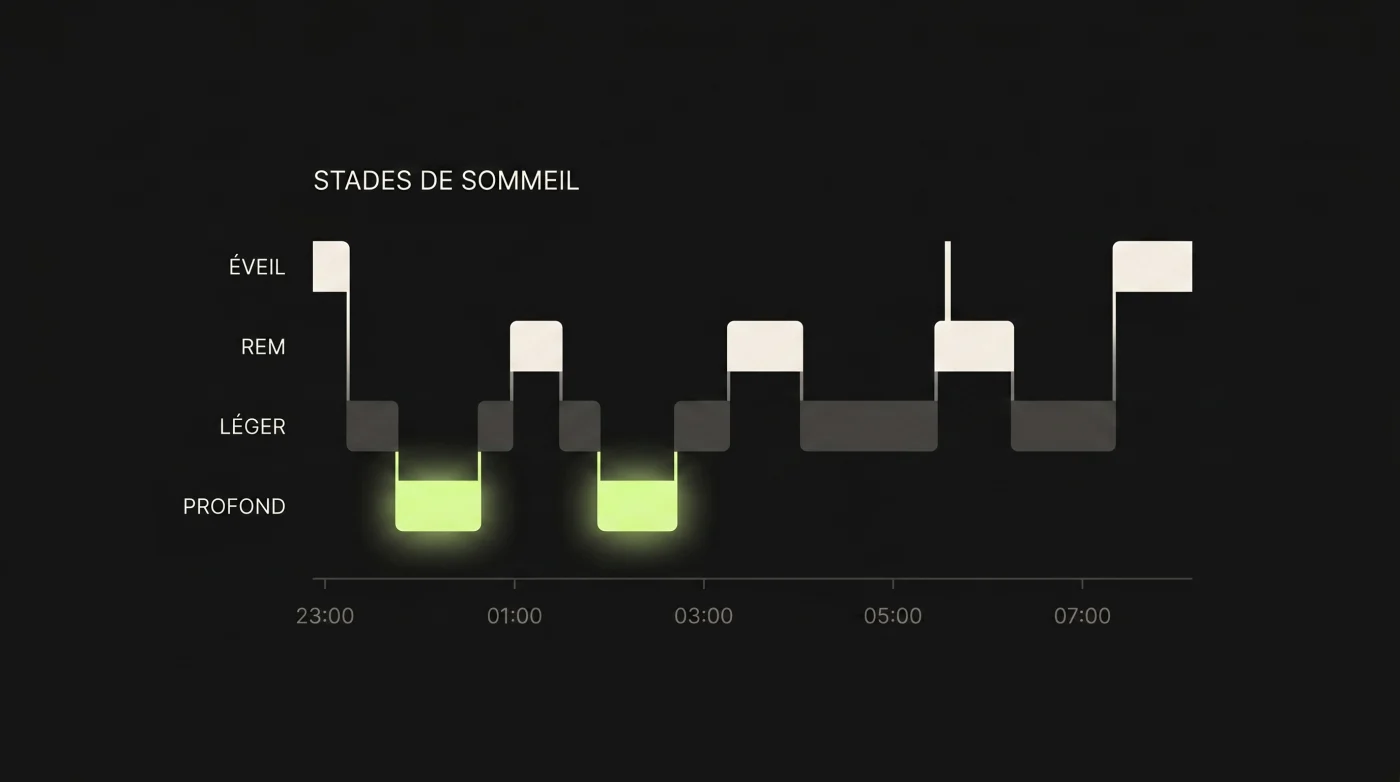
During the night, your body moves through cycles of roughly 90 minutes. Deep sleep dominates the first part of the night, then gradually gives way to REM sleep toward early morning. A healthy adult typically spends between 13 and 23 % of the night in deep sleep. Below that, you can wake up tired even after eight hours in bed.
7 levers to gain more deep sleep
1. A consistent bedtime
Your internal clock loves consistency. Going to bed and waking up at the same time, even on weekends, builds sleep pressure at the right moment and increases the share of deep sleep.
2. Lower the bedroom temperature
Deep sleep sets in when your body temperature drops. A room around 18 °C, a warm shower before bed and a breathable duvet all help this thermal descent.
3. Cut screens and bright light
Blue light delays melatonin production. Dim the lights an hour before bed and keep your phone away from where you sleep.
4. Time your caffeine and alcohol
Caffeine has a half-life of five to six hours: a coffee at 4 pm is still active at midnight. Alcohol, on the other hand, gets you to sleep quickly but destroys the deep sleep in the second half of the night.
5. Move during the day
Regular physical activity increases the amount of deep sleep you get, as long as you avoid intense effort in the two hours before bed.
6. A wind-down routine
Slow breathing, reading, stretching: a calm evening ritual signals to your nervous system that it's time to switch into recovery mode.
7. Measure to adjust
You can only manage what you measure. Tracking your sleep stages night after night lets you see the real impact of every change, instead of guessing.
How KEORA helps you
The KEORA smart ring tracks your sleep stages, overnight heart rate and temperature, then turns it all into a clear score every morning. You can see right away whether your screen-free evening actually added deep sleep. And if your nights are still restless, the app can recommend the formula Ritual Sleep, designed to calm your mind without dependency or morning grogginess.
Sleeping better isn't about sleeping more. It's about giving your body the right conditions to dive deeper.