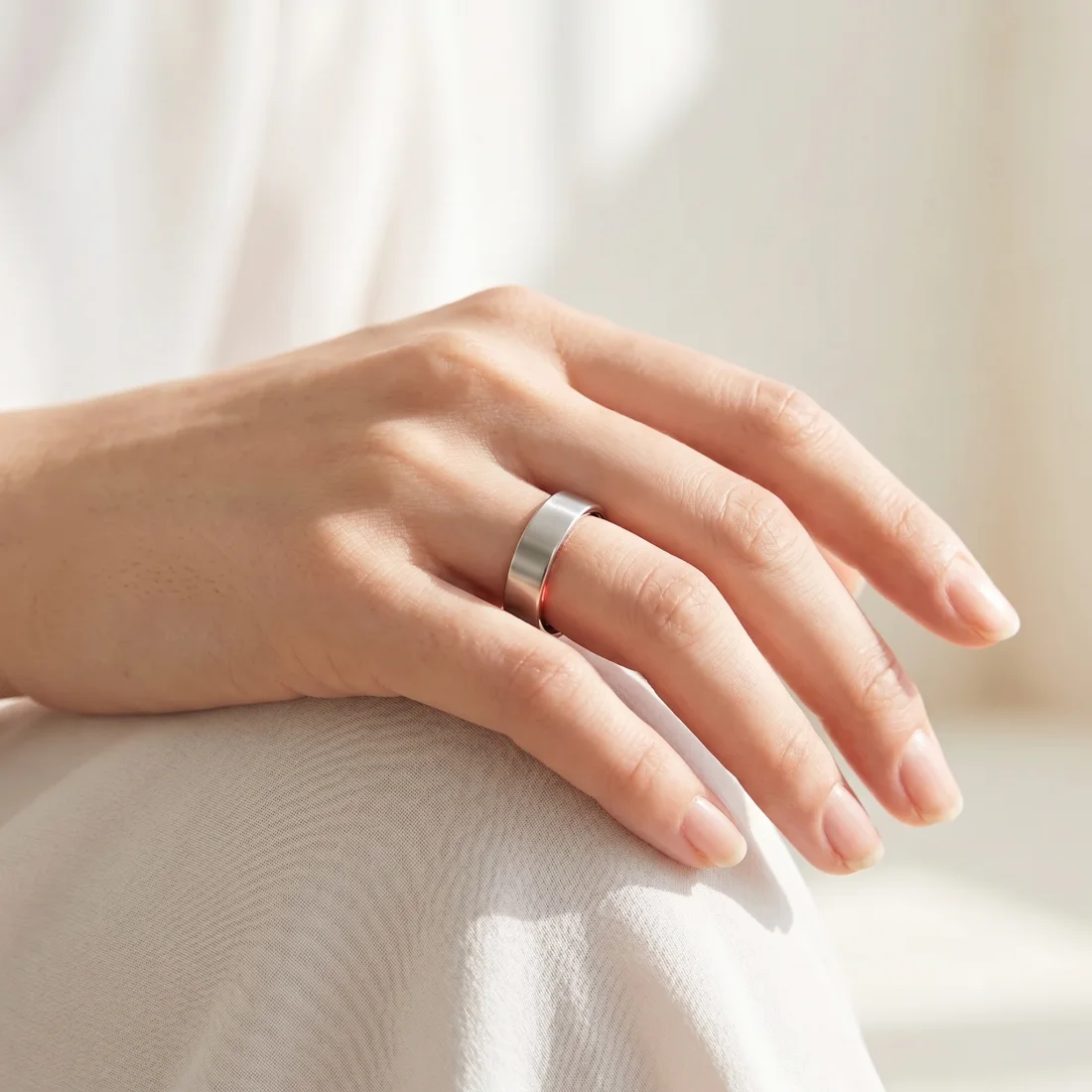
A little stress is useful: it gets you moving. The problem is chronic stress, the kind that never really lets up. Over time, it wears down your sleep, your focus and your immune system. The good news is that it's measurable, so it's manageable.
Stress, a physiological signal
When you're under pressure, your body activates the sympathetic nervous system: your heart rate rises, heart rate variability drops, and your breathing becomes shallower. These markers respond in real time, often before your mind has even registered the stress. That's why objective tracking is so useful: it makes visible what you haven't felt yet.
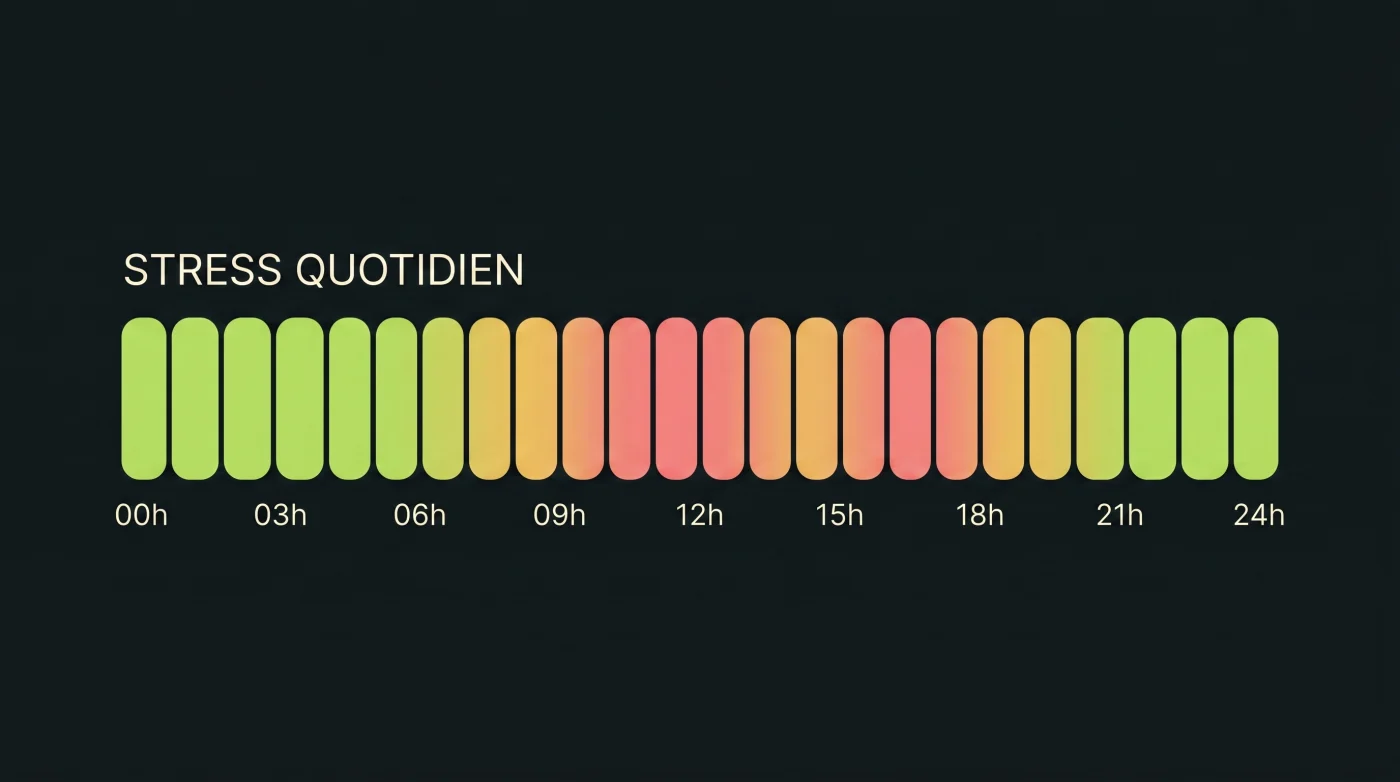
Spot your triggers
When you map your stress peaks against your day, patterns emerge: the 9 a.m. meeting, the skipped lunch, the late-night scrolling. Naming these triggers is half the battle. We act far more effectively on a clear pattern than on a vague sense of unease.
5 simple steps to take back control
- Heart coherence breathing: inhale for 5 seconds, exhale for 5 seconds, for 5 minutes. It's the fastest way to calm your nervous system.
- Micro-breaks: every 90 minutes, stand up, look into the distance, walk for two minutes.
- Morning daylight: it sets your body clock and reduces stress reactivity.
- Movement: even 20 minutes of walking lowers cortisol.
- Protect your evenings: fewer screens, more calm wind-down routines so you don't take stress to bed with you.
Tracking your stress with KEORA
The KEORA Ring tracks your stress level throughout the day based on your heart rate and HRV, and suggests breathing exercises at just the right moment. If tension stays high, the app can recommend the formula Ritual Energy based on Ashwagandha, an adaptogen studied to help regulate cortisol.
You can't eliminate stress. But you can learn, day by day, to bring it back down faster.