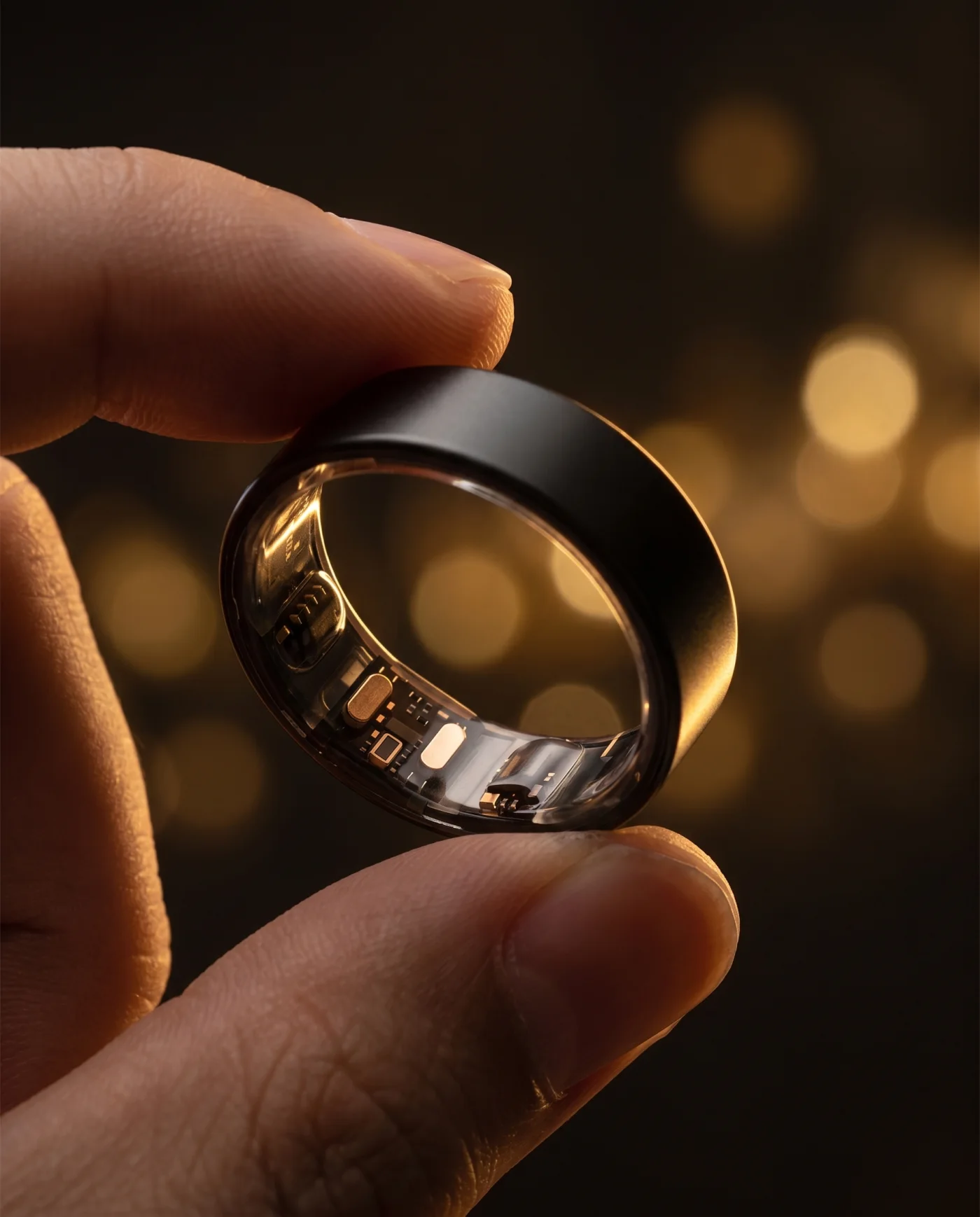
Smart watches and smart rings share the same goal: tracking your health around the clock. But their form makes all the difference, especially at night, when most of your recovery happens.
Comfort and the night
A ring is easy to forget you're wearing, even in bed. A lot of people find a watch bulky to sleep in, yet it's precisely at night that tracking your sleep, of the HRV and the temperature is the most valuable. The finger also provides a heart rate signal that is often very stable at rest.
Battery life
A ring uses very little power and lasts several days, while many watches need charging every day or nearly so. Fewer charges means more nights tracked without interruption.
Screens: asset or distraction?
The watch puts everything on your wrist, which is handy for sport and notifications, but it also brings the distractions. The ring bets on discretion: your data lives in the app, not on your finger. It's up to you to decide what you're looking for.
The KEORA proposition
The KEORA Ring focuses on what matters most for your wellness, day and night, with no screen or distraction, and an app that turns your data into actionable advice. Compare the offers to find the formula that suits you.
The best sensor is the one you actually wear, even at night.